
Smear Tests & You: All You Need To Know
Let’s face it, a smear test isn’t at the top of most people’s idea of a fun afternoon, no one enjoys having to undress for a medical exam in a sensitive and private area. But, smear tests do save lives every year and are vitally important to ensuring you maintain one area of your gynaecological health. So this article is all about the smear test, what it does, how it’s done, what you can do to help yourself feel more comfortable with them when you have to go for one.

Did you know there’s a best time to have your smear test? It’s best to have your smear test in the middle of your cycle where possible – If you have whacky cycles, I recommend giving it two weeks after you stop bleeding from your period.
Just as there is a best time to have your smear there are also times you should not have a smear test, like while you are on your period/bleeding as the blood can affect the sample, rendering it useless. Likewise, you also cannot have your smear test if you are less than 12 weeks postnatally.
Smear tests now test you for the HPV virus, certain strains have high risk links to cervical, anal, vaginal, & vulval cancer. If your test is positive, then you’ll receive yearly smear tests until your body can shed the virus, if negative you’ll continue with a three yearly cycle.

You have the right to access this medical test in a way that is comfortable for you, within reason. If your GP is being awkward, tell them they are required to make “reasonable adjustments”. This could mean prescribing things like muscle relaxers or something to help severe anxiety/PTSD, having an advocate with you – this only needs be a close friend or relative.


Don’t sit in your nerves alone, talk to someone about your worries and fears to help make it feel a little less isolating. If I had a quid for every woman I’ve had tell me they’ve worried so much about a smear because of the potential results I’d be a millionaire. The results are really quite important and can dramatically affect your life moving forward – I’d say worries and anxieties about it are so normal and totally understandable.
Consider wearing something long, like a long skirt or dress, this may enable you to remain mostly dressed, only removing your underwear and using the skirt to cover yourself, leaving you feeling less exposed and hopefully, therefore, a little less nervous too.
Consider if you need to ask for someone to accompany you to the appointment, you won’t need to let anyone know if you plan on just having someone wait for you in the waiting room, but if you want them to come and hold your hand as your chaperone or advocate, just let your surgery or clinic know that’s what you are doing.
If you have been given any medication to help you through, take it about 30 minutes before your appointment time so that you have the full effect during your smear test.

You’ll be called through from the waiting room, and the nurse should sit you down and explain the process, what you’ll be asked to do and what will happen. Then you should be given a little privacy in order to get undressed and to lay down in position on the bed, covered by paper or your own dress or skirt. The nurse should make herself known by knocking or asking if you are ready before entering the bed area.
Once the nurse has re-entered the bed area, she will ready herself for the test with gloves, an apron and the equipment she will need to perform your smear test. The equipment needed comprises of a speculum and the brush tool used to take a sample of cervical cells.
During the test the speculum is coated in lubricant and then inserted into the vagina to open it, they are hollow tubes to insert the brush through to your cervix. Did you know that you can ask for a smaller sized speculum if you struggle with pain, are very anxious or have tissue disorders that affect your vagina etc. You can also ask to insert the speculum yourself
Some people have more sensitive cervix’s than others and you may want to take a little liner to pop in your underwear in case of light spotting, but, I wouldn’t expect bleeding. Equally some people may feel some discomfort after but nothing paracetamol/ibuprofen shouldn’t fix, but it’s also a great excuse to grab out a hot water bottle and snuggle up on the sofa with a nice hot drink and a trashy tv show.


Ideally, it’s best to try and stick to the three yearly tests, however, I’d only say to book one asap, and be prepared to wait because the system is overwhelmed.
You can expect your results via letter afterwards, usually after about two weeks, though it can be up to six weeks. These tests take a couple of weeks to run and it taking longer doesn’t mean your results will show up something nasty
Smear test results will be split into two halves, the HPV test and the smear test.

It’ll tell you if you are positive or negative. if you’re positive you will then be told if that was with any cell changes, or if not. If you have positive a HPV test this means you have the high risk strains of HPV, if you have no cell changes then you’ll be called back after a year to check if the HPV has gone. If you have HPV with cell changes you’ll be invited for a colposcopy to check the status of the cell changes and further treatment will be decided on depending on the changes observed and the results of a biopsy.
You will then receive the results of the cervix cytology and that can be abnormal even if you have a negative HPV test. These changes are usually hormonal and will resolve themselves so it’s safe to stay having smears every 3-5 years.
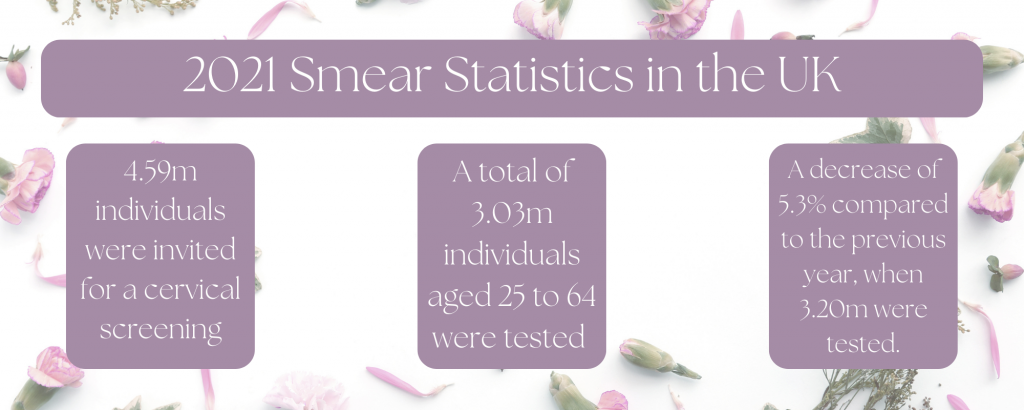
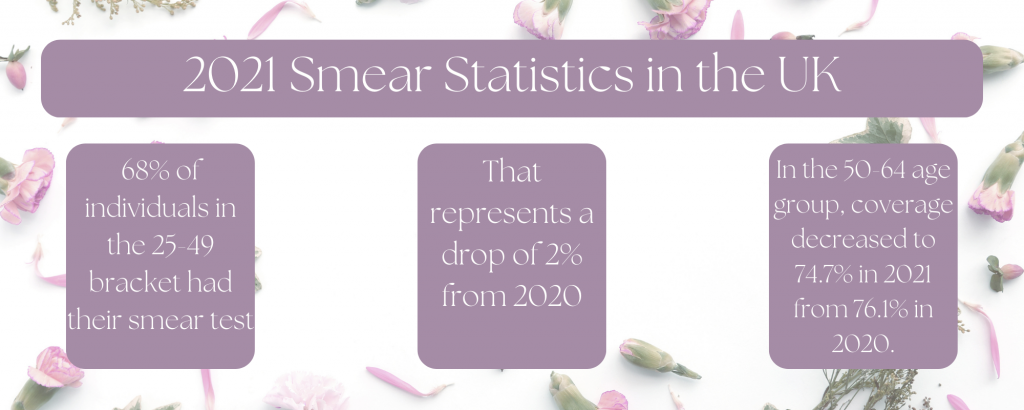
If you are interested in reading more about the cervical smear test that have been quoted throughout this article then you can find the full report here.





One Comment
A WordPress Commenter
Hi, this is a comment.
To get started with moderating, editing, and deleting comments, please visit the Comments screen in the dashboard.
Commenter avatars come from Gravatar.